Over the past year, I’ve come across the term “digital twin” quite a bit, a term I really like because it sounds pretty cool!
So I started gathering information to see how it could be applied in geotechnical engineering.
This week’s article is all about that.
I’ve never applied it myself, but I hope this introduction helps both you and me explore ways to incorporate it or at least gain a solid 101 understanding in case the technology becomes more widely implemented in the future.
So, What are Digital Twins?
They are virtual replicas of physical assets that allow engineers to simulate, analyze, and optimize ground/infrastructure conditions.
When integrated with Internet of Things (IoT) sensors and machine learning, digital twins bridge the gap between theoretical models and real-world conditions.
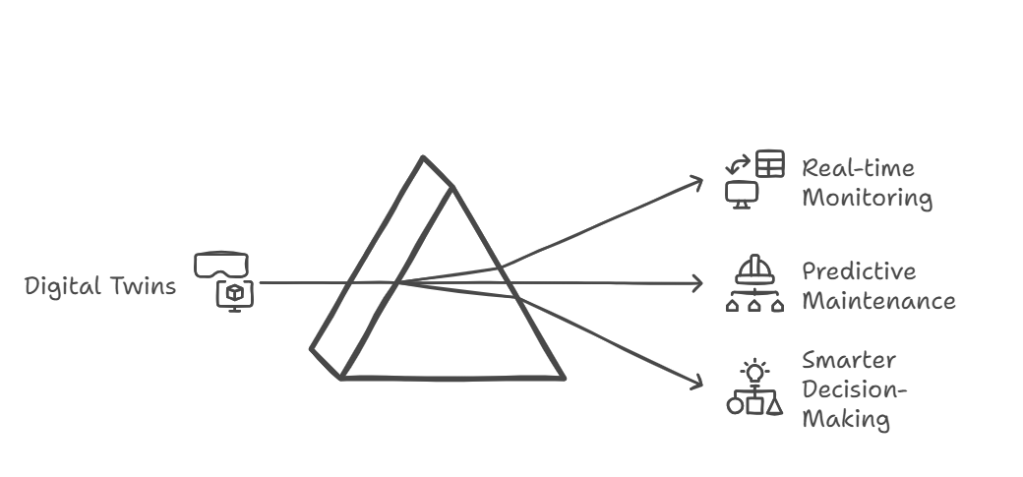
They enable real-time monitoring, predictive maintenance, and smarter decision-making, sounds cool, right?
Why They Matter for Geotechnical Engineers?
I think unlike conventional geotechnical models, digital twins are dynamic. They continuously update based on incoming field data, making them far more reliable for some applications like:
- Site characterization: Combining IoT sensor data with ML models for real-time anomaly detection and subsurface visualization.
- Foundation design: Simulating stress conditions and optimizing designs to reduce material waste.
- Underground construction: Providing real-time risk assessments, ensuring rapid response to changing site conditions.
- Slope stability & geohazard prediction: Using predictive analytics to detect potential landslides or subsidence before they become catastrophic.
The result? More accurate designs, reduced uncertainties, and improved decision-making throughout a project’s lifecycle.
Now, How to Implement a Digital Twin in Your Project
I’ve always looked for a general approach to incorporating digital twins into geotechnical projects.
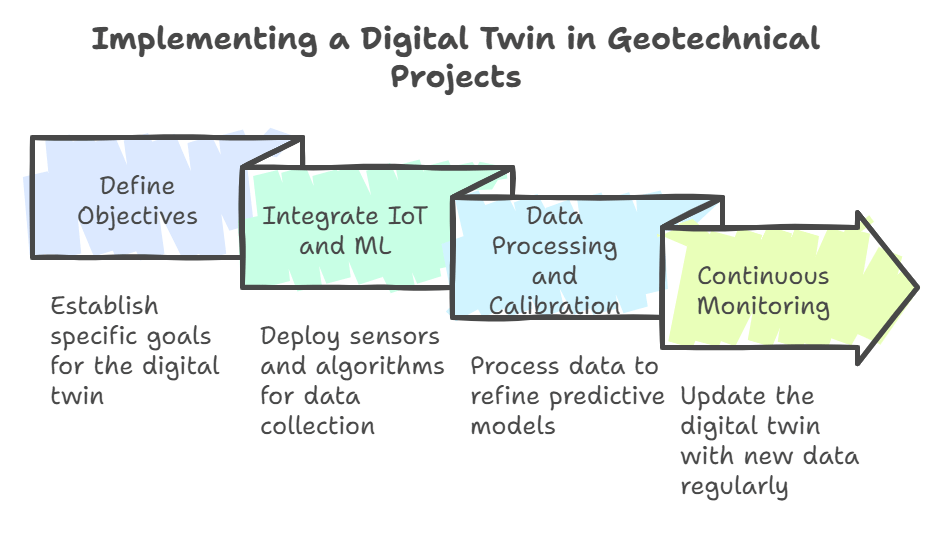
After digging into the concept, I came up with four key steps that outline how to think about their implementation.
Hopefully, these steps capture the core of how digital twins can be applied effectively. Here they are:
1. Define Your Objectives
Before jumping in, outline the specific goals of the digital twin.
Are you optimizing foundation design? Monitoring soil behavior? Predicting geohazards? Defining the scope ensures a targeted, effective implementation.
2. Integrate IoT and Machine Learning
A successful digital twin relies on accurate data. Deploying IoT sensors for real-time monitoring and leveraging ML algorithms to interpret the data are critical for improving predictive accuracy.
3. Data Processing and Model Calibration
Raw data alone isn’t enough. High-fidelity processing platforms transform sensor inputs into actionable insights, refining the digital twin’s predictive power.
4. Continuous Monitoring and Maintenance
A digital twin isn’t a one-time setup, it requires constant updates. Regularly feeding it new data ensures reliability, helping engineers proactively address site changes and potential risks.
Now, There Are Some Challenges:
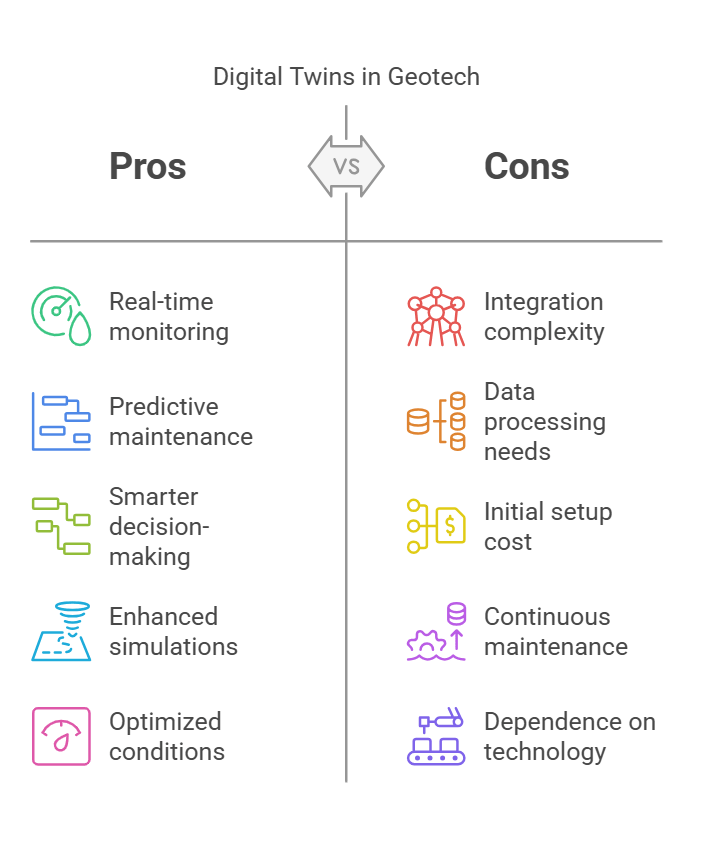
While the benefits are clear, adopting digital twin technology isn’t without hurdles.
High implementation costs and data security concerns remain significant barriers, especially for smaller firms.
However, advancements in AI and IoT are making digital twins more accessible. As these technologies evolve, we can expect:
- Enhanced real-time analytics for better decision-making
- Wider industry adoption due to decreasing costs
- Standardization efforts to facilitate seamless integration across projects
The Bottom Line
Digital twins are revolutionizing geotechnical engineering by merging virtual models with real-time data.
They empower engineers with deeper insights, improved risk assessment, and smarter decision-making.
But many challenges exist!
Further Resources
Here are two videos to watch if you want more on this:
Want more insights like this?
Subscribe and be part of a network of geotechnical professionals exploring AI and digital transformation.
 STAIGES: Insights
Leave a comment